How to Distinguish Real Pearls from Plastic Imitations: A Practical Guide from Lombok

Authentic Lombok pearls glow from within — a luster plastic can never copy.
It was late afternoon in Sekotong, and the air smelled of salt and sun-dried nets. Inside a small pearl workshop overlooking the Lombok Strait, a young woman named Anisa held two necklaces in her hands. Both looked white, round, and shiny. Both were offered at what the seller called a very good price. She had saved for months to buy her first pearl necklace — a graduation gift to herself — and she did not want to get it wrong.
"Which one is real?" she asked quietly.
The farmer smiled, placed a pearl from each necklace on the wooden table, and invited her to look closer. No magnifying glass. No laboratory tools. Just light, touch, and a story that began deep inside a Pinctada maxima oyster. In the next twenty minutes, Anisa learned what every pearl lover should know: how to distinguish a real pearl — born through years of layered nacre inside a living creature — from a plastic imitation made in minutes in a factory mold.
This guide tells that same story. If you have ever wondered whether a pearl is genuine, or felt uncertain at a jewelry counter, here is everything you need to know, told the way pearl farmers in Lombok would teach it: practically, honestly, and with respect for the sea that creates these gems.
Why Real Pearls Are So Different From Plastic
A real pearl, whether South Sea, Tahitian, Akoya, or freshwater, is not simply a bead. It is a biological creation. When an irritant enters an oyster, the animal coats it with nacre — microscopic layers of aragonite crystals and conchiolin protein. Layer after layer, year after year, nacre builds up. The result is not just a color on the surface, but a deep, inner structure that interacts with light in a way no paint or coating can replicate.
A plastic imitation, on the other hand, is a solid plastic or glass bead dipped in pearlescent paint — often called "pearl essence" made from fish scales or synthetic mica. It may look convincing at arm's length, especially under shop lighting, but it has no nacre layers, no organic growth, and no inner depth. Understanding this difference explains why every reliable test works: you are not testing shine alone, you are testing how the pearl was made.
Lombok, and especially the waters around Sekotong and Gerupuk, is one of Indonesia's most respected homes for saltwater pearl farming. The Pinctada maxima oysters grown here produce South Sea pearls prized for their large size, satin luster, and natural colors from white and silver to champagne gold. Because Lombok pearls carry real value, they also attract imitations. Learning to tell the difference protects not only your money, but your appreciation for craftsmanship.
Test 1: The Tooth Test — Feel the Nacre
This is the oldest trick in the pearl world, and pearl farmers still use it daily.
Gently slide the pearl across the biting edge of your upper front teeth. Do not bite hard; a light rub is enough.
- Real pearl: Feels slightly gritty, like fine sandpaper or the texture of a ceramic plate. That friction comes from the tiny, overlapping nacre platelets. Even a smooth, high-quality pearl will show subtle resistance.
- Plastic imitation: Glides smoothly and almost squeaks. The pearlescent coating is uniform and glassy, with no micro-texture.
Glass pearls can sometimes feel slightly gritty too, so the tooth test is a strong first filter but never the only one. Rinse the pearl after testing — teeth and pearl dust do not need to linger.

Real nacre shows fine overlapping texture under light — plastic looks flat and flawless.
Test 2: The Light Test — Depth of Luster
Bring the pearl to a window or under a bright, neutral light. Do not use colored spotlights that jewelers sometimes use to flatter fakes.
- Real pearl: The luster comes from within. You will see a soft, deep glow, often with a slight play of secondary colors — a hint of rose on white pearls, or green-gold on golden South Sea. The reflection of a light source on the surface is sharp but not harsh, and the area around it seems to illuminate gently.
- Plastic imitation: The shine sits on the surface like nail polish. The reflection is hard, mirror-like, and the rest of the bead looks flat. Color is mono-tone, lacking subtle overtones.
Experienced buyers in Lombok often roll the pearl slowly between thumb and forefinger under light. Real pearls show a subtle rolling luster that shifts as layers of nacre catch light at slightly different angles.
Test 3: The Surface Test — Embrace Imperfection
No pearl straight from nature is absolutely perfect. Even gem-grade South Sea pearls have microscopic growth marks when viewed up close.
- Use a 10x loupe or your phone macro lens. Real pearls reveal tiny ridges, pits, or faint blemishes — a natural fingerprint. The surface looks organic, slightly waxy, never industrial.
- Plastic pearls look unnaturally perfect, or they show tell-tale flaws of paint: tiny peeling chips, uniform dimples from the mold, or a coating seam around the drill hole where paint pools.
Paradoxically, a strand that looks too perfect at a suspiciously low price is the biggest warning sign. The sea does not mass-produce identical orbs.
Test 4: The Temperature and Weight Test — Trust Your Hand
Real pearls are quite dense and conduct temperature differently from plastic.
- Temperature: Place pearls against your cheek or inner wrist. Real pearls feel distinctly cool at first, then slowly warm with your body heat. Plastic feels lukewarm or warm instantly. Glass pearls feel cold longer than real pearls but feel heavier.
- Weight: Real pearls have pleasant, solid heft. Plastic pearls of the same size feel noticeably lighter and almost hollow when you toss them lightly in your palm. For a strand, real pearls drape with gravity; plastic strands bounce more.
Farmers in Sekotong often let visitors simply hold a strand with eyes closed. Your skin learns faster than your eyes.
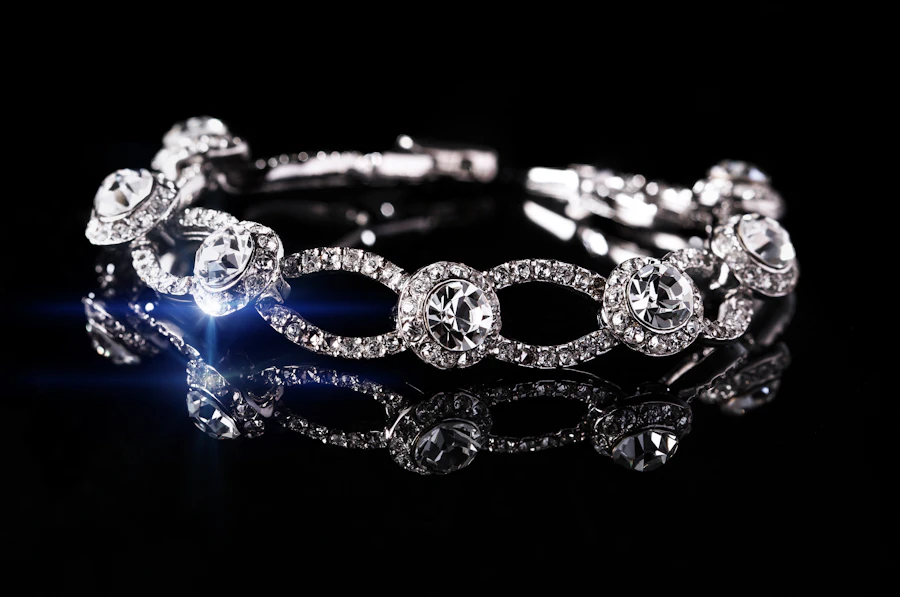
A genuine Lombok pearl set — weight, cool touch, and inner glow you can feel.
Test 5: The Drill Hole Test — Where Fakes Confess
If the pearl is already drilled, look closely at the hole with your loupe.
- Real pearl: The hole edge is sharp and clean. Inside the hole you can often see a clear separation between nacre layers and the nucleus (in bead-nucleated pearls) or solid nacre throughout (in non-nucleated freshwater pearls). Fine nacre dust may be visible, but the layers look solid.
- Plastic imitation: The hole edge often shows chipped or melted plastic, rough paint buildup, or a visible gap between the core bead and the coating. Sometimes you can see the white plastic core peeking through where paint has worn thin. A thread through plastic holes often shows paint flakes.
This is one reason reputable Lombok jewelers leave drill holes clean and will happily let you inspect them under magnification.
Test 6: The Price and Context Test — Ripple, Not Just Bead
Not every test is tactile. Common sense filters out most fakes before you even touch them.
- A 10mm to 13mm perfectly round, flawless, matched golden South Sea strand advertised for under $150 is not a bargain. A single genuine pearl of that size and quality can cost hundreds of dollars, and a full strand can run into thousands. Nature does not supply perfection cheaply.
- Ask origin. A trustworthy seller can tell you whether the pearls are Lombok South Sea, freshwater, Akoya, or Tahitian, which farm or region they came from, and what nacre thickness or treatment — if any — they have received. Vague answers like "shell pearl" or "real pearl feel" are euphemisms for imitation.
- Ask for documentation for high-value pieces. Authentic South Sea pearls often come with a certificate describing size, shape, color, luster, and nacre quality. Plastic never needs documentation because there is nothing to certify.
- Examine craftsmanship. A genuine pearl deserves good craft: smooth knotting between beads, a solid gold or sterling clasp, straight drilling, and careful matching of luster across the strand. Fakes are frequently strung on thin elastic or cheap alloy clasps that tarnish quickly.
5 Mistakes Buyers Make — And How to Avoid Them
- Relying on a single test. The tooth test plus the drill hole inspection or luster check together are far stronger than any one test alone. Coated glass fakes can sometimes fool teeth, but rarely all tests together.
- The destructive scratch myths. You may see advice to scratch a pearl with a knife or rub it hard against another surface. Do not. You will damage real nacre. If you must see powder, a very gentle fingernail scrape that produces fine, odorless powder which wipes away cleanly indicates calcium carbonate nacre; plastic produces shavings or nothing.
- The sink or swim myth. "Real pearls sink, fake pearls float" is unreliable. Density varies by pearl type and nucleus. Many plastics are engineered to sink.
- Trusting fire tests. Burning or heating a pearl ruins it and says little. Nacre smells faintly like burning hair or bone due to protein content when scorched, while plastic smells acrid and melts — but by then you have already destroyed the jewelry.
- Buying under pressure. Lombok's best workshops never rush you. They invite you to compare, ask questions, and return tomorrow. High-pressure tactics and "today only, one piece left" urgency often mask imitations.
A Pearl Farmer's Final Check — The Story Test
Anisa's farmer added one last test no manual can fully capture: the story test.
"A real pearl has a story," he told her. "Which lagoon, how many years in the water, what color of lip the oyster had, who grafted it, who harvested it. If a seller cannot tell you even a small part of that story — where the oyster lived, why this pearl has this overtone — you are probably buying a story written in a factory, not the sea."
Transparency is the quiet signature of authenticity. In established Lombok workshops, you can often see grading trays, nacre thickness notes, and farmers who speak of water temperature and cleaning schedules as farmers elsewhere speak of rain and soil. That culture of care is itself evidence.
How to Care for Real Pearls So They Stay Real
Imitations peel; real pearls age gracefully if you treat nacre kindly:
- Wipe with a soft cotton cloth after each wear to remove skin oils and perfume.
- Put pearls on last — after makeup, perfume, and hairspray — and take them off first.
- Store separately from metal jewelry in a soft pouch; pearls are softer than metal and scratch.
- Never store in dry airtight plastic for long periods — pearls need slight humidity. A silk pouch breathes perfectly.
- Have strands restrung every year or two if you wear them often, using knotting between pearls so a single thread break does not scatter them.
Frequently Asked Questions
Can a jeweler test a pearl without damaging it?
Yes. Gemologists use magnification, luster grading, X-radiography to see the internal growth structure, and UV light behavior. None of these harm the pearl.
Are freshwater pearls less "real" than South Sea pearls from Lombok?
Both are real pearls. South Sea pearls are typically larger, rarer, and more expensive due to the size of the Pinctada maxima oyster and longer growth time. Freshwater pearls are cultivated differently and often offer beautiful value. "Real" refers to nacre growth versus imitation coating, not to origin.
What about "shell pearls" or "Mallorca pearls"?
Those are well-made imitations with a glass or plastic core coated multiple times with pearlescent material. They can be pretty costume jewelry, but they are not real pearls. Reputable sellers label them clearly.
If I already bought a strand and now doubt it, what should I do?
Take it to a local gemologist or a trusted pearl workshop in Lombok for a non-destructive check. Bring any certificate you were given. Most workshops will examine a strand for free and explain what they see through the loupe with you.
Back in Sekotong, Anisa chose the strand whose pearls felt cool, slightly gritty on her teeth, and showed that quiet inner light. She paid more than the plastic price, but far less than regret. Today that necklace still catches light when she moves — because it does not borrow shine from paint, it holds light inside layers built over years by a living Lombok oyster.
That is the real difference between real and plastic. One is made. The other is grown. Learn to feel that difference once, and you will never unsee it.
Find Your Authentic Lombok Pearl
Loved this guide? Let us help you choose a pearl that tells your story — from lustrous South Sea strands to everyday freshwater elegance, all sourced and graded with transparency from Lombok's trusted workshops.
Visit Website: mutiaralombok.lagibelanja.com Chat on WhatsApp
Have a pearl you want checked? Send us a photo on WhatsApp — our team in Lombok is happy to help you look closer.
Photos: Unsplash — illustrative pearl jewelry photography. Pearl education content based on Lombok South Sea pearl cultivation practices.
Posting Komentar untuk "How to Distinguish Real Pearls from Plastic Imitations: A Practical Guide from Lombok"
Posting Komentar